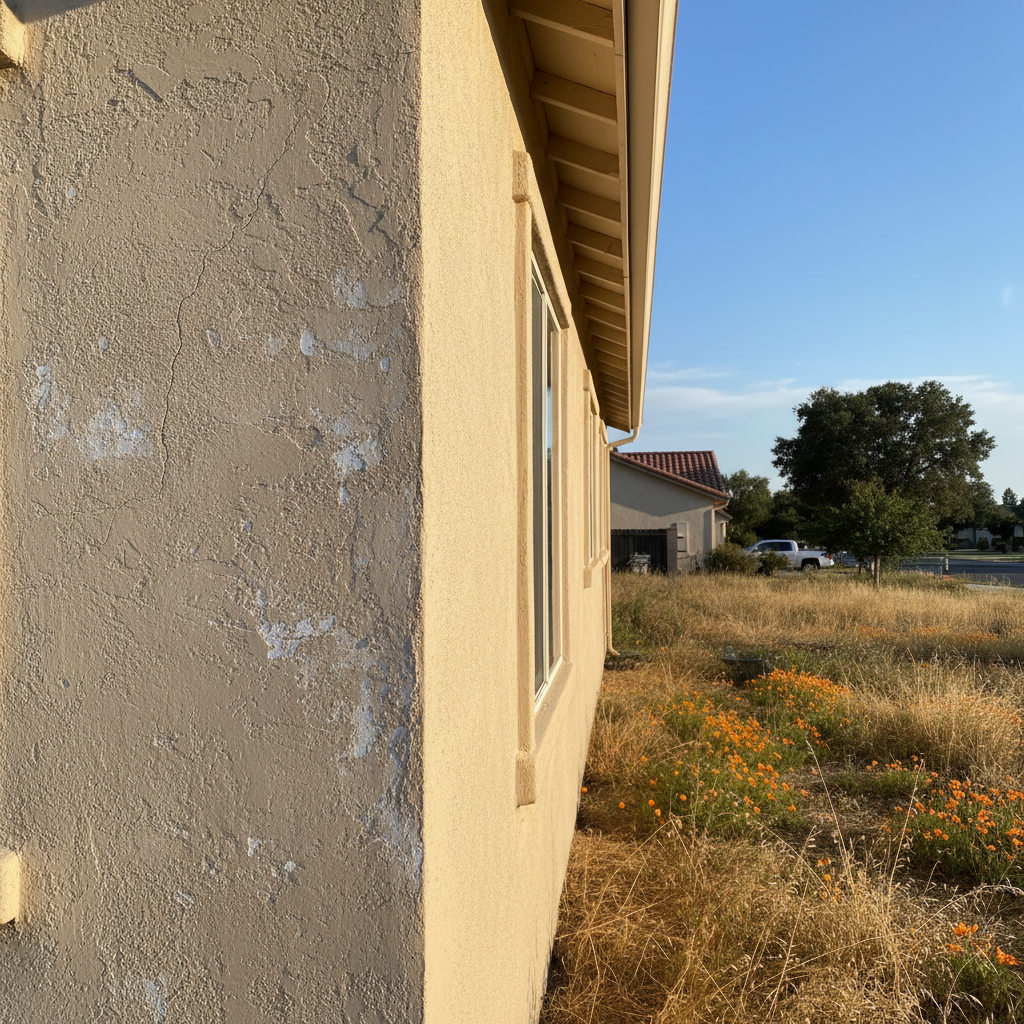
Stucco Choices: It's Not as Simple as You Think
Thinking about stucco for your house? Good call. It's a fantastic, durable finish, especially here in the Central Valley. But when people say 'stucco,' they might actually be talking about a couple of different things. There's your traditional, cement-based stucco, and then you've got synthetic stucco, often called EIFS. Both have their place, sure, but they're definitely not the same. And knowing the difference? That can save you a lot of headaches and money down the line. Let's get into it.
Traditional Stucco: The Tried and True
When I mention traditional stucco, I'm talking about that classic mix of cement, sand, lime, and water. It's been around for centuries, and for good reason. This stuff is tough, it breathes, and it gets hard as a rock once it cures. Here's what you should know:
- Durability: This material is incredibly durable. It can really take a beating from the sun, the wind, and even the occasional rogue sprinkler head. We see homes all over Turlock — from the older neighborhoods near downtown to the newer builds out by Monte Vista — with traditional stucco that's held up for decades with minimal fuss.
- Cost: Generally, the material itself for traditional stucco costs a bit less than synthetic. However, the labor can be more intensive because we apply it in multiple coats, often over a lath and paper system. That adds time. So, the upfront cost can actually be pretty comparable, sometimes even a little more for traditional, depending on how complex the job is.
- Maintenance: It's pretty low maintenance. You'll want to keep it clean, maybe gently power wash it every few years. Cracks can happen, especially with our expansive clay soils here that can cause some foundation movement, but they're usually hairline and easy enough to repair. It's also naturally resistant to rot and termites, which is a big plus, wouldn't you say?
- Appearance: It has that classic, hard, masonry look. You can get different textures, from smooth to rough, but it always feels substantial. The color gets mixed right into the finish coat, so it's not just some surface layer.
Synthetic Stucco (EIFS): The Modern Option
EIFS stands for Exterior Insulation and Finish System. It's a multi-layered system that includes an insulation board, a base coat with a reinforcing mesh, and then a finish coat. It's newer to the scene compared to traditional stucco, but it does have some real advantages, especially when you think about energy efficiency.
- Durability: Synthetic stucco is also very durable, but in a different way. It's more flexible than traditional stucco, which means it's less prone to cracking from minor structural shifts. It's also impact-resistant, so a stray baseball or a kid on a bike isn't going to chip it quite as easily.
- Cost: The material cost can be higher for EIFS, but the application can sometimes be quicker because it's lighter and often applied in fewer passes. That insulation factor can also lead to long-term savings on your energy bills, which is a big deal when our Turlock summers hit 100+ degrees.
- Maintenance: Similar to traditional, it's low maintenance. Cleaning is usually all that's needed. The biggest thing with EIFS is making sure it's installed correctly with proper drainage. If water gets trapped behind it because of a bad installation, you can have real problems. That's why picking an experienced contractor like Precision Stucco Turlock is so crucial.
- Appearance: EIFS can achieve a wider range of finishes and colors, including very smooth, modern looks that are harder to get with traditional stucco. It can also be molded into decorative shapes and architectural details more easily.
So, Which One Should You Pick?
Look, both are good products when installed right. But for most homeowners in Turlock, especially considering our climate and typical residential construction, I usually lean towards traditional stucco. Here's why:
It breathes. That's a huge factor here. While EIFS has come a long way with drainage systems, traditional stucco inherently allows moisture to escape more easily. With our occasional heavy rains followed by intense heat, you really don't want anything trapping moisture against your home's structure. Traditional stucco has a proven track record for decades in our specific conditions, handling the temperature swings and the general wear and tear of Central Valley life.
It's also a bit more forgiving if minor repairs are needed down the road. You don't have the same concerns about a compromised vapor barrier that you might with a poorly installed EIFS system. For a reliable, long-lasting, and relatively low-stress exterior that stands up to Turlock's weather, traditional stucco is often the smarter, safer bet.
Now, if you're building a highly energy-efficient custom home and working with an architect who specifies a well-designed EIFS system with a rain screen, that's a different story. But for the average re-stucco or new build around here, you just can't go wrong with the classic.
Need a Hand?
If you're still weighing your options or ready to get a quote, give Precision Stucco Turlock a call. We've been doing this for years, and we know what works best for homes right here in our community. We'll walk you through it — no pressure, just honest advice.